

How Often Do Hedges Need to be Trimmed?
Trimming your hedges is one of those simple jobs that can completely transform how your garden looks and feels. A neatly cut hedge instantly makes everything appear tidier, brighter, and more cared for, even if you haven’t touched the rest of the garden.
At Evolution Tree Surgery, we often get asked “how often do hedges need to be trimmed?”, so we’ve put together this beginner-friendly guide so you can keep your outdoor space looking sharp all year round.
How Often Should Hedges Be Trimmed?
Most hedges need trimming once or twice a year, whereas fast-growing formal hedges may need two to three cuts.
How often your hedges should be trimmed depends on the type – formal or informal – species growth rate, and UK legal restrictions like the Wildlife and Countryside Act 1981, which limits cuts from March to August to protect nesting birds.
Formal Hedges
Formal hedges feature neat, compact shapes with tightly clipped edges, adding style to outdoor spaces. They require trimming 2-3 times yearly to maintain their polished look, such as in spring (late February-early March) and late summer (August-September). Cut to a batter (wider at the base than top) for light penetration and fuller growth at lower branches.
Fast-growers like privet, Leylandii, or cherry laurel need this regular attention to prevent overgrowth.
Informal Hedges
Informal hedges have natural, looser structures with large leaves, blooms, or berries, thriving with minimal intervention. Trim once yearly after flowering to encourage next season’s blooms, typically late summer or early autumn. For boundary privacy, prune less often to allow taller growth.
Species like holly, yew, hawthorn, beech, or hornbeam suit this schedule.
| Hedge Style | Frequency | Best Times (UK) |
| Formal (e.g., Privet, Box) | 2-3 times/year | Spring, late summer |
| Informal (e.g., Holly, Beech) | 1 time/year | Post-flower, autumn |
When to Cut Hedges to Avoid Nesting Birds
In the UK, Section 1 of the Wildlife and Countryside Act 1981 restricts trimming from March to August to protect nesting birds, so always check for wildlife first.
Late winter (February) or early autumn (September-October) are usually the safest windows outside nesting season.

What are The Benefits of Trimming a Hedge?
There are two main types of trimming to ensure hedges stay healthy, attractive, and manageable, rather than becoming sparse, leggy, or out of control.
Maintenance Trimming
Maintenance trimming keeps your hedges looking neat and well-defined, instantly improving curb appeal and making the whole garden feel more cared for. By cutting back overgrown branches, you also prevent hedges from encroaching onto paths, driveways, and neighbouring properties, which helps maintain clear boundaries and safer access.
Formal Pruning
Formative pruning, on the other hand, focuses on long-term health and structure. Removing dead, damaged, or diseased branches stops problems from spreading and encourages strong, vigorous new growth.
It also helps shape young hedges, creating a dense framework that becomes easier to maintain over time. When done correctly, formative pruning can boost flowering and fruiting, supporting wildlife while keeping your hedge full from top to bottom.
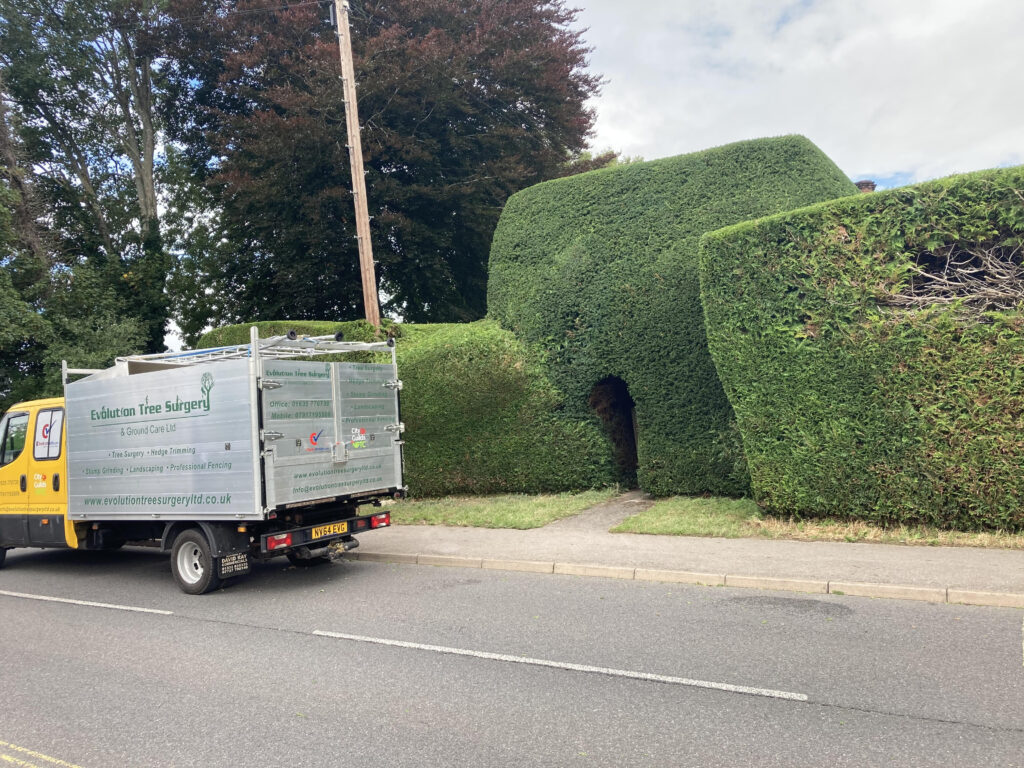
Professional Hedge Trimming and Cutting Services
If you’re looking for professional and qualified hedge trimming experts in Newbury, Berkshire, Reading and the surrounding areas, get in touch with us today.
For a free hedge trimming quote, call Evolution Tree Surgery in Newbury at 07917 195806.
FAQs
How often do hedges need to be trimmed in winter?
In winter, trim sparingly and only on frost-free, dry days. Formative pruning on young or deciduous hedges is fine during dormancy, but avoid heavy cuts on tender evergreens that are prone to winter damage.
Is it illegal to cut hedges in summer?
It isn’t automatically illegal, but UK wildlife law protects active bird nests; avoid March–August unless you’ve checked thoroughly and confirmed no nesting activity, and keep any summer work light and targeted.
Is October too late to trim a hedge?
October is generally acceptable for light shaping, especially for many evergreens and after nesting season, but avoid severe reductions to prevent frost damage to new growth going into winter.
What months should you not cut hedges?
Avoid March–August if birds may be nesting, and avoid severe pruning in mid-winter cold snaps; species-specific guidance may shift ideal windows slightly.
Can you trim a hedge too much?
Yes. Over-trimming can expose brown inner wood, shock plants, and reduce vigour. Some conifers won’t regenerate from old wood, so stay within green growth and opt for staged reductions.
Can I trim a privet hedge in September?
Light trims are fine in early September, but many guides suggest stopping strong cuts by late summer so growth can harden before winter; plan heavier shaping earlier and keep autumn work minimal.
Related Guides:
- Hedge Removal Made Easy: Step-by-Step
- How Much Does Hedge Trimming Cost?
- What Is the Legal Height of a Hedge Between Neighbours?
- What is a Tree Surgeon?
- When is the Best Time to Cut Trees Back
- Step-by-Step: How and When to Trim Box Hedge